
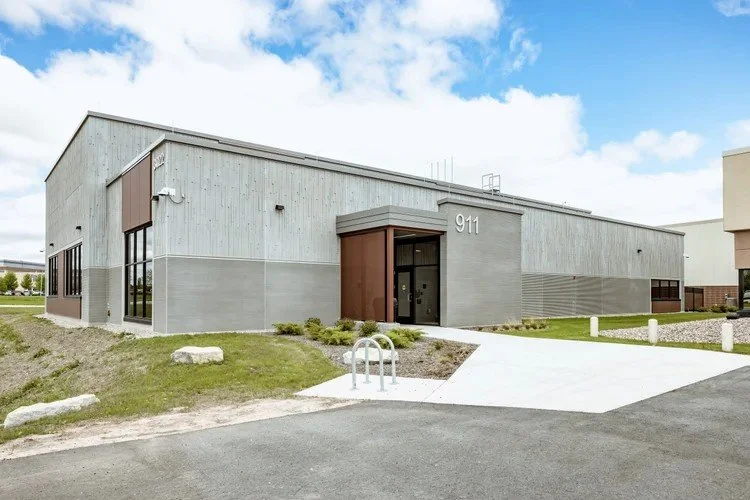
Outagamie County 911 Communication Center: Appleton, WI
Municipal buildings serve as the backbone of a community. From public safety facilities and administration offices to service centers and communication hubs, these structures must perform reliably for decades while remaining efficient, safe, and welcoming. For architects and city officials tasked with delivering long-lasting public infrastructure, precast concrete systems provide a dependable and highly efficient solution.
At International Concrete Products and Mid-States Concrete Industries, we’ve partnered on a wide range of municipal and civic projects across the Midwest. These projects demonstrate how precast concrete helps communities construct durable, cost-effective buildings while maintaining strong architectural character.
Built to Serve Communities for Generations
Municipal facilities must withstand heavy daily use, environmental exposure, and the test of time. Precast concrete is well suited for these demands because of its strength, durability, and low maintenance requirements.
Structural precast systems, including beams, columns, and double tees, create resilient frameworks capable of supporting the large open spaces often required in civic buildings. Hollowcore plank provides excellent load capacity while maintaining structural efficiency, making it ideal for multi-level facilities.
Faster Construction with Minimal Community Disruption
Municipal projects are frequently built in active neighborhoods where extended construction timelines can create challenges for residents and nearby businesses. One of the most significant advantages of precast concrete is its ability to accelerate construction schedules.
Because precast components are manufactured off-site in a controlled environment, site preparation and fabrication occur simultaneously. Once delivered, wall panels, hollowcore, and other components can be installed quickly, allowing buildings to take shape in a matter of days or weeks.
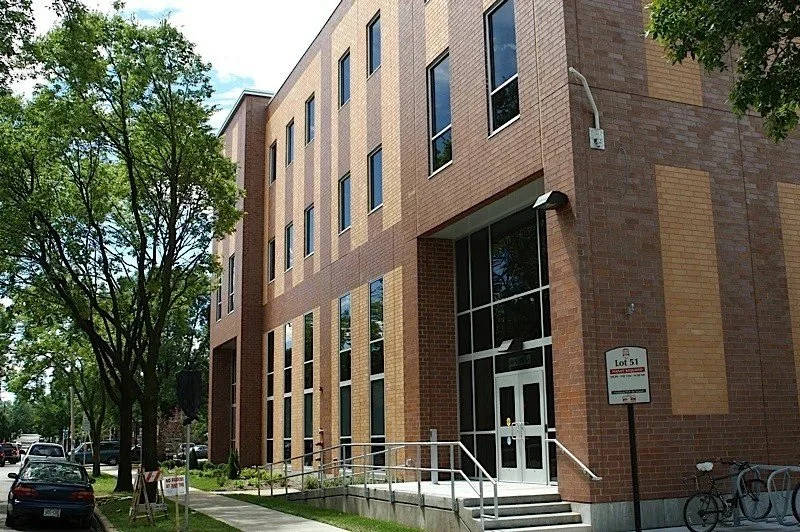
University of Wisconsin Physical Plant: Madison, WI
University of Wisconsin Physical Plant Facility: Madison, WI
A great example of precast efficiency is the University of Wisconsin Physical Plant facility in Madison. This three-story building was delivered through a design-build process.
Precast wall panels were erected in the dead of winter and installation was completed in just 13 days, demonstrating the speed of precast construction even during winter conditions. Brick was cast directly into the panels to achieve the traditional aesthetic the university desired while eliminating the time and labor required for conventional block and brick construction.
The facility features a 22-foot floor-to-floor height on the first level for shop space, while floors two and three measure 14 feet floor-to-floor for offices and support areas.
Safety, Strength, and Fire Resistance
Public buildings must meet strict safety and fire protection standards, and precast concrete naturally supports these requirements. Its noncombustible composition provides excellent fire resistance without requiring additional fireproofing materials.
Precast wall panels and hollowcore floor systems can achieve high fire ratings, helping municipalities meet building code requirements while enhancing safety for staff and visitors alike.
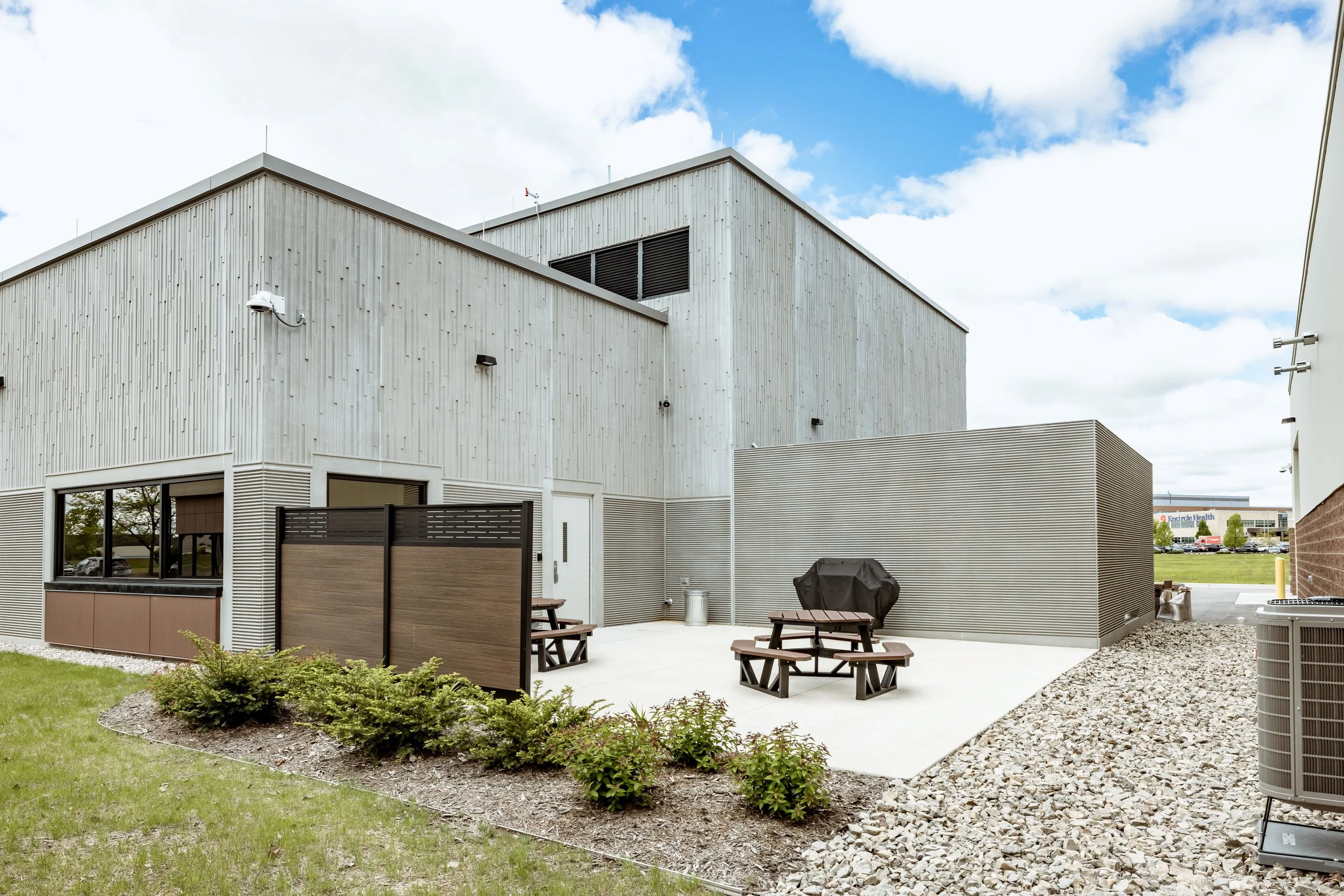
Outagamie County 911 Communication Center: Appleton, WI
The Outagamie County 911 Communication Center highlights the strength and reliability precast concrete provides for critical infrastructure. This 10,000-square-foot facility supports the county’s emergency response operations and includes modern consoles, radio equipment, phone systems, and expanded workstation capacity.
Precast concrete was used to construct the building’s exterior, totaling 82 pieces covering 16,200 square feet. The panels feature an acid-etched finish combined with two different form liners, creating visual texture while delivering the durability required for a critical public safety facility.
Cost Efficiency and Long-Term Value
Municipal budgets must balance immediate construction costs with long-term operational expenses. Precast concrete delivers value in both areas.
The controlled manufacturing process ensures consistent quality while minimizing material waste. Rapid installation reduces on-site labor requirements and shortens construction schedules. Over time, the durability of precast systems also reduces maintenance, repair, and replacement costs.
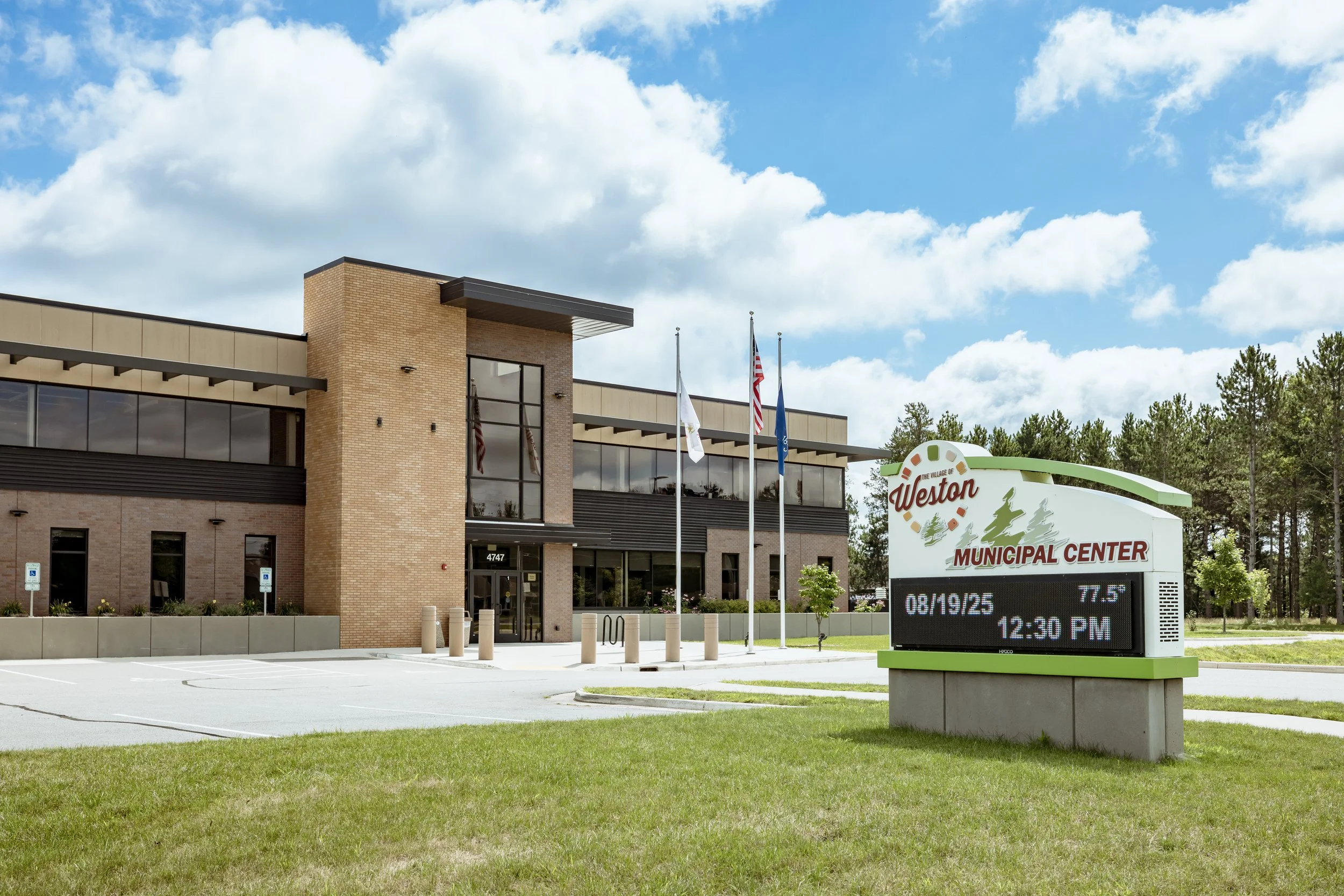
Weston Municipal Center: Weston, WI
Village of Weston Public Works & Administration Facility: Weston, WI
The Village of Weston Public Works and Administration Facility demonstrates the long-term value of precast construction. Built to replace aging buildings that had reached the end of their useful life, the new complex includes administration offices, a board room, vehicle repair bays, wash bays, workshops, and staff areas.
The building’s exterior was constructed entirely with precast concrete, including 261 pieces totaling 56,100 square feet. Architectural finishes feature two colors of brick at the entrance along with red granite exposed aggregate and acid-etched trim, creating a durable yet visually distinctive facility designed to serve the village for decades.
Design Flexibility for Civic Identity
Municipal buildings often serve as architectural landmarks within their communities. Precast concrete wall panels and cladding provide architects with the flexibility to design structures that reflect local character while maintaining structural efficiency.
Architectural precast can replicate materials such as brick and stone while offering custom textures, colors, and patterns. Panels can also incorporate insulation, window openings, and architectural details that simplify construction while enhancing visual appeal.
A Smart Choice for Public Infrastructure
Municipal projects demand solutions that are durable, efficient, safe, and visually appealing. precast concrete systems deliver on all of these priorities while helping architects, engineers, and city officials create buildings that will serve their communities well into the future.
At Mid-States Concrete Industries and International Concrete Products, we’re proud to partner with municipalities, architects, and contractors to bring these important projects to life. From emergency communication centers and public works facilities to service centers and community infrastructure, precast concrete continues to prove its value as a versatile and dependable building solution.
By incorporating hollowcore, beams, columns, double tees, wall panels, and cladding, municipal projects can achieve faster construction, long-term durability, and architectural flexibility. This makes precast concrete a smart investment in the future of our communities.
Contact us today to learn more about how precast concrete can benefit your municipal projects.