
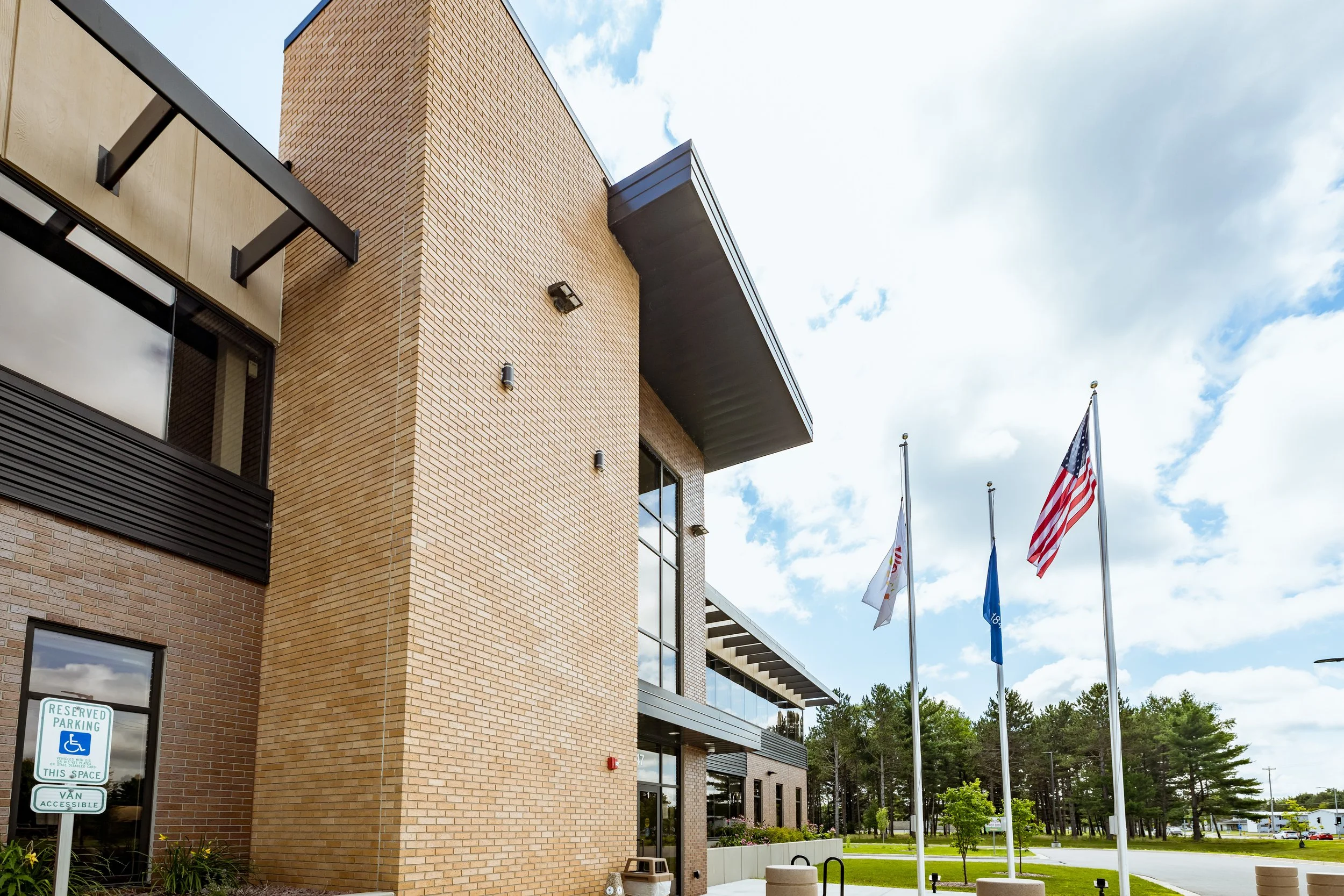
Weston Municipal Center: Weston, WI
Brick has timeless appeal. It conveys warmth and permanence. But when designing with precast concrete, architects often face an important decision: should we incorporate real brick into the precast panel, or achieve the look with a brick form liner?
Both approaches offer compelling advantages. The right choice depends on aesthetic goals, budget, schedule, and performance requirements.
Option 1: Thin Brick Cast into Precast Panels
With this method, thin brick is placed face-down in a form before the concrete is poured. Once cured and lifted, the finished panel reveals real brick embedded into the precast.
Why Architects Choose It
Authenticity & Depth
There’s no substitute for real brick. You get true color variation, natural texture, and shadow lines created by mortar joints.Durability & Bond Strength
Because the brick is cast into the panel under controlled plant conditions, the bond between brick and concrete is strong and consistent.Installation Efficiency
Brick and structure are installed in one step. There’s no separate masonry trade on-site, which can reduce coordination challenges.Design Flexibility
Patterns, soldier courses, banding, and color blends can all be pre-engineered into the panel layout.
When It Makes Sense
Projects that must match historic surroundings
Education, multi-family, or civic buildings seeking contextual warmth
Projects where long-term durability is critical
Option 2: Brick Form Liners
Brick form liners are molds placed in the precast formwork to create a brick pattern relief in the concrete surface. Pigments and surface treatments complete the illusion.
Why Architects Choose It
Cost Efficiency
Form liners eliminate the material and placement costs of thin brick while still delivering a brick-like appearance.Weight Reduction
Panels are lighter without embedded brick, which can reduce structural demands and shipping costs.Creative Freedom
Form liners allow you to reinterpret brick, whether you want to scale it up, abstract it, deepen joints, or combine it with other textures seamlessly within the same panel.Monolithic Performance
Because the surface is entirely concrete, there are no separate materials or mortar joints to maintain.
Why It Makes Sense
Budget-conscious projects
Contemporary designs that reinterpret traditional brick
Large-scale facades where repetition drives efficiency
Key Considerations for Architects
When deciding between thin brick and a brick form liner, one must consider:
Aesthetic Intent
Is the goal authenticity or interpretation? If the project calls for the look of authentic brick, thin brick may be the right move. If you’re exploring abstraction or modern expression, a form liner may provide more freedom.Budget Parameters
Thin brick adds material and labor cost in fabrication. Form liners can deliver a similar aesthetic at a lower price point.Structural & Panel Design
Weight, attachment points, and panel thickness all factor into the decision. Early collaboration with your precast partner ensures alignment between design intent and engineering efficiency.Schedule
Because both systems are fabricated off-site in controlled conditions, they reduce weather-related delays compared to traditional field-laid masonry. However, form liners may offer slightly shorter fabrication cycles due to fewer components.
The Hybrid Approach
Here’s the part that often surprises people: it doesn’t have to be either/or.
Projects can combine real thin brick in highly visible areas with brick form liners elsewhere. This strategic mix maintains visual authenticity where it matters most while optimizing budget and weight across the building envelope.
Precast concrete makes this integration seamless. When brought into the conversation early, your precast partner can help you model costs, evaluate weights, develop mockups, and refine details before documents are finalized.
Because whether you choose real brick or a form liner, the goal is the same: a facade that performs beautifully and looks exactly the way you envisioned.